
PostDICOM vs Medicai for Remote Collaboration Tools
Many teams still trade large image files over email or USB drives when they need a second opinion across locations.
This wastes hours each week and slows treatment decisions. By the end of this article you can compare how Medicai and PostDICOM handle real-time multi-location sharing, structured reporting, and zero-footprint viewers, then pick the platform that fits your workflow and budget.
Quick Verdict: PostDICOM vs Medicai for Remote Collaboration Tools
Medicai processes over 1 million studies annually and maintains 1.7 million studies in cloud storage while offering HIPAA-compliant, zero-footprint DICOM viewing.
PostDICOM offers basic remote access to medical images, yet its scale and infrastructure details remain undocumented in public sources.
Medicai stands out with 300,000 recent visualizations and 50 million yearly API transactions, figures that signal robust performance under real-world clinical loads.
Both platforms claim HIPAA compliance, but Medicai adds GDPR certification, FDA clearance, and CEE clearance to its security profile.
Partnerships with Microsoft Azure and Amazon AWS give Medicai enterprise-grade uptime and global reach that smaller vendors rarely match.
With 70 clinics, 10,000 active physicians, and over 2 million uploaded studies, Medicai demonstrates proven adoption for teams needing reliable image sharing and remote collaboration.
At a glance: how Medicai compares to PostDICOM, Medicai for Remote Collaboration Tools on the features that matter most.
| Feature | Medicai | PostDICOM | Medicai for Remote Collaboration Tools |
|---|---|---|---|
| Remote Collaboration Tools | ✓ | ✗ | ✓ |
What Is Medicai?
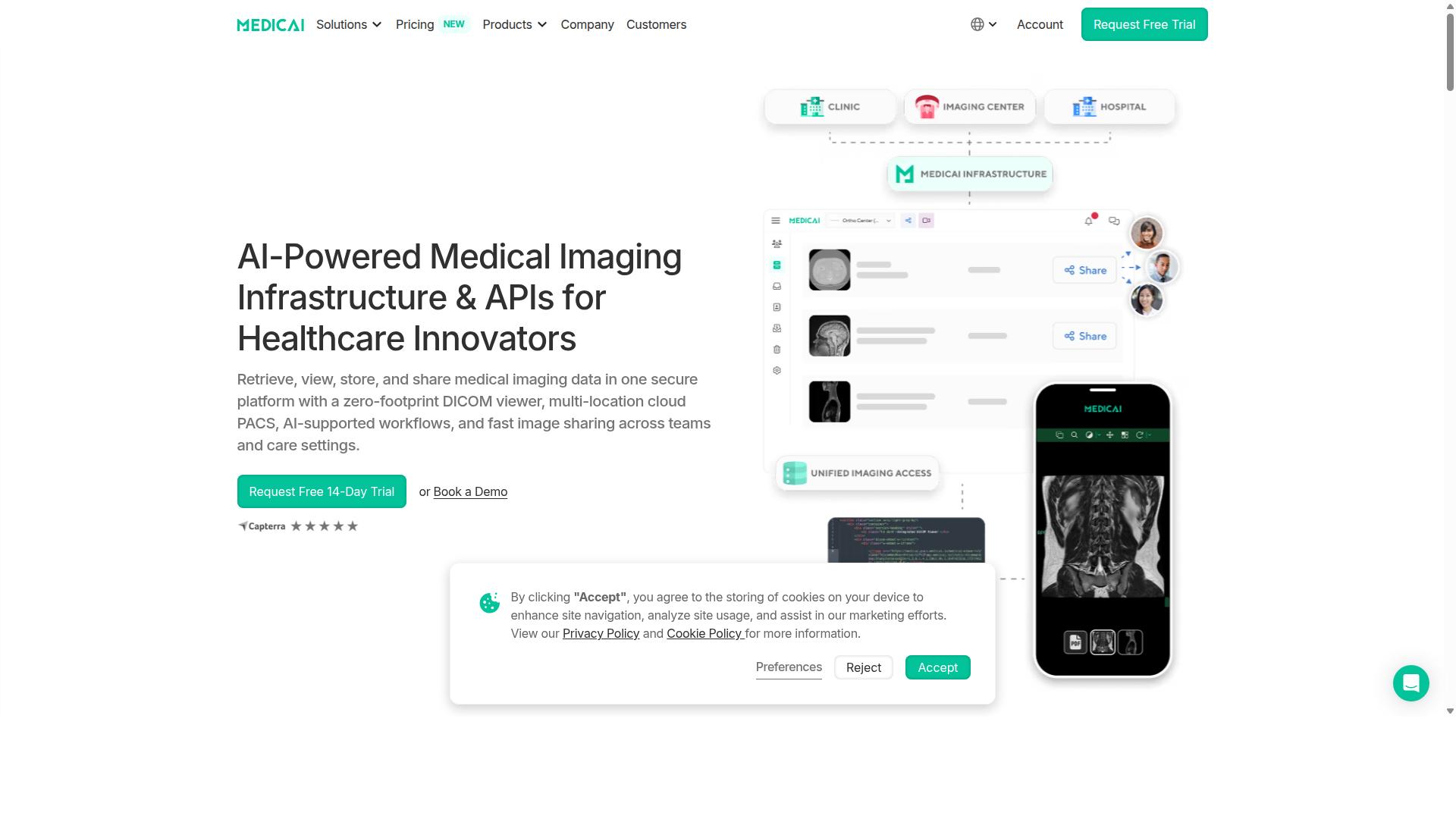
Medicai operates as a cloud-based medical imaging platform that consolidates retrieval, viewing, storage, and sharing of imaging data within a single secure environment. Zero-footprint DICOM viewer architecture means users access studies without installing software or maintaining local infrastructure.
Cloud-native deployment supports multi-site teams through unified access that removes VPN requirements entirely. The system operates across different locations while maintaining consistent performance for remote collaboration.
Imaging Infrastructure as a Service allows healthcare organizations to scale storage and processing capacity based on actual usage patterns. Unified platform combines PACS functionality with sharing capabilities that support tele-radiology and second opinion workflows.
AI-supported workflows integrate directly with existing radiology processes to assist with image analysis and diagnosis support. Fast image sharing across care settings reduces delays that traditional transfer methods create between referring physicians and specialists.
Interoperability features enable connections with existing hospital systems while preserving data encryption and access controls. Multi-location cloud PACS functionality provides centralized management for distributed teams that need consistent study access regardless of physical location.
What Is PostDICOM?
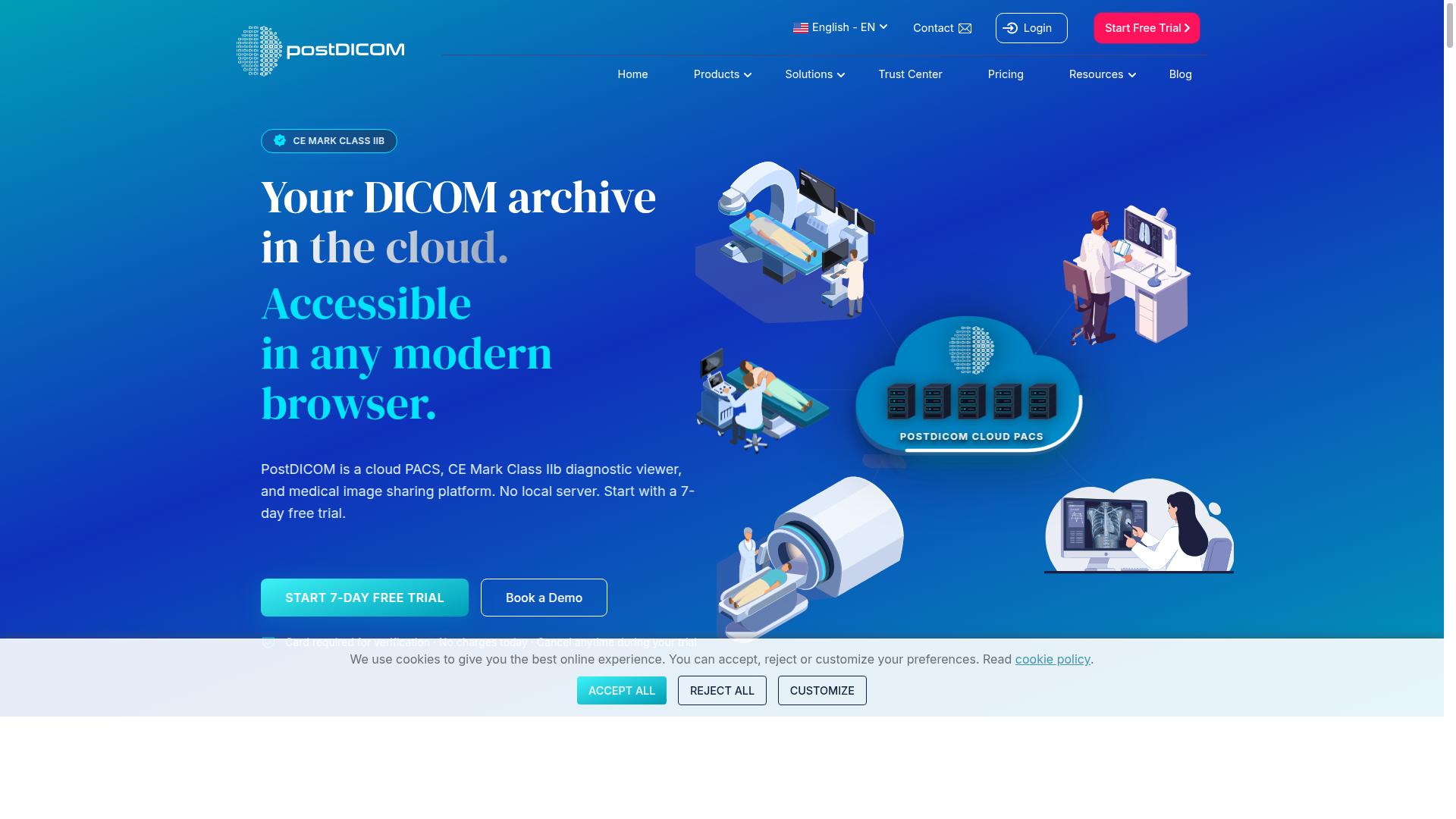
PostDICOM is a cloud-based DICOM viewer and PACS alternative that enables users to upload, store, and share medical images through browser-based access. This platform supports medical professionals who need flexible access to imaging data without traditional on-premise infrastructure.
Remote collaboration represents one of the primary use cases for this type of platform. Radiologists and referring physicians can review studies together through shared access points, which reduces the need for physical image transfers between facilities.
Users typically access these systems through standard web browsers across different devices. Image sharing becomes more straightforward when teams can review the same study simultaneously from separate locations, supporting consultation workflows and second opinion requests.
Many platforms in this category offer annotation tools and measurement capabilities that help teams discuss specific findings during remote sessions. The ability to maintain audit logs during these collaborative activities ensures compliance requirements are met while supporting clinical discussions.
Performance considerations often include bandwidth optimization features that help maintain reasonable loading times across varying internet connections. Cross-platform support allows teams to participate in reviews whether they access the system through desktop computers or mobile devices during consultations.
What Is Medicai for Remote Collaboration Tools?
Medicai enables remote collaboration by letting clinicians upload DICOM studies once and instantly grant secure access to referring physicians, specialists, or second-opinion partners anywhere in the world.
The platform relies on Medical Image Exchange to move studies without physical media or hospital-to-hospital transfers. Clinicians send cases through encrypted links that maintain audit logs and control who can view or download files.
Patient Case Management keeps everything organized by patient, date, or referring service. Teams can attach notes, track versions, and update status without leaving the same workspace.
Multi-user access works through any modern browser, so participants do not install local software. Referrers, residents, and consultants open the DICOM Viewer directly to review images, compare studies, and leave comments in real time.
The service also includes Doctor Imaging Portal and Patient Imaging Portal for role-specific views. External partners log in with limited permissions while internal staff retain full control over routing and annotations.
Integrations with existing Cloud PACS and Vendor Neutral Archive systems allow hospitals to maintain current storage while adding collaboration features. No duplicate archives are required, and studies remain accessible through the original workflow.
Features Compared
This section breaks down how Medicai and PostDICOM approach real-time image sharing, structured reporting, and AI-assisted workflows for distributed care teams.
Understanding these differences helps medical organizations choose tools that match their remote collaboration requirements. Each platform offers distinct approaches to handling medical imaging data across multiple locations.
The comparison focuses on three critical areas where performance impacts daily clinical operations and patient outcomes.
Real-Time Multi-Location Image Sharing
Medicai routes DICOM studies through globally distributed cloud infrastructure so that multiple locations can view and annotate the same study simultaneously.
The platform processes over 50M API transactions annually while maintaining availability across regions through partnerships with Microsoft Azure and Amazon AWS. This infrastructure supports 70 clinics and hospitals currently using the system for collaborative work.
PostDICOM implementations typically rely on single-region servers that may introduce delays when teams span different geographic areas. Organizations managing high-volume image exchange often require additional network optimization when using traditional setups.
Bandwidth optimization becomes essential for teams handling large CT and MRI datasets across multiple time zones. Medicai's cloud architecture distributes load automatically based on user location and study size.
Structured Reporting and Case Management
Medicai's Patient Case Management module links DICOM images directly to structured reports, allowing physicians to attach annotations, measurements, and AI findings within a single patient timeline.
The Vendor Neutral Archive component stores over 1.7M studies while maintaining interoperability with existing EHR systems through standard health data exchange protocols. This integration reduces duplicate data entry across different platforms.
PostDICOM reporting features vary in their ability to connect imaging data with longitudinal patient records. Some implementations require separate systems for managing case workflows and image storage.
Structured reporting capabilities become important when multiple specialists need to contribute findings to the same patient case. The Patient Case Management approach consolidates these contributions in one accessible location.
Zero-Footprint DICOM Viewer and AI Workflows
Medicai's viewer runs entirely in the browser while embedding FDA-cleared AI models from partners such as MD.ai and Rayscape for automated measurements and 3D reconstruction.
The zero-footprint design enables access from any device without local software installation. Over 300k DICOM visualizations occurred through this viewer in the past year alone, demonstrating consistent performance across different clinical environments.
PostDICOM viewers may require browser plugins or desktop applications depending on the specific deployment configuration. This requirement can limit accessibility when team members work from various device types or network environments.
AI-assisted workflows integrate directly with the viewing interface through partnerships with established medical imaging AI providers. The FDA-cleared status ensures these tools meet regulatory standards for clinical use.
Pricing Compared
Medicai publishes transparent monthly subscription tiers while PostDICOM pricing details are not publicly listed at the time of writing. This transparency helps teams budget for remote collaboration tools without hidden fees or surprise charges. Organizations can compare exact costs against their storage and connectivity needs.
Medicai offers three tiers designed for different medical imaging workflows. The Starter plan at $249 per month includes 500 GB of cloud storage with unlimited user accounts for small teams. The Standard plan scales to $749 monthly for 2 TB storage and one connected location, supporting larger radiology groups.
Yearly billing provides 15 percent savings for both Starter and Standard tiers. Enterprise customers receive custom pricing based on storage requirements and multiple connected locations. A one-time $1,000 DICOM Gateway setup fee applies per location for on-premise integration.
PostDICOM pricing structure appears subscription-based but lacks published details for direct comparison. Without transparent tiers, medical practices must contact sales teams to understand costs for DICOM viewer access, image sharing capabilities, and PACS integration features.
Medicai includes a 14-day trial of Starter plan features at no cost. No credit card information is required to evaluate the platform's remote collaboration tools, HIPAA compliance features, and medical imaging capabilities before committing to monthly or annual billing.
Who Should Choose Medicai
Hospitals and multi-site imaging centers that need HIPAA-compliant, globally accessible image exchange with built-in AI tools will find Medicai's feature set aligned with enterprise radiology workflows.
These organizations typically handle complex cases that require input from multiple specialists. Real-time collaboration becomes essential when radiologists, cardiologists, and oncologists work across different time zones or facilities.
Medicai serves healthcare providers including hospitals and imaging centers that need secure image sharing. Specialty care providers in orthopedics, neurology, oncology, and radiology benefit from the platform's multi-user access capabilities.
The platform also supports teleradiology services and virtual care providers. Medical education organizations and clinical trials benefit from the same secure sharing features that enable case discussions without physical presence.
Personal injury lawyers and tumor boards find value in the platform's ability to share studies across locations. Patient Portal access extends these capabilities to patients who need to review their imaging studies remotely.
Organizations requiring PACS integration across multiple specialties will find Medicai accommodates their existing workflows. The platform serves ob-gyn, pulmonology, dentistry, and gastroenterology practices that need consistent remote collaboration tools.
Who Should Choose PostDICOM
Smaller practices or individual clinicians seeking a straightforward, browser-based DICOM viewer without complex integrations may consider PostDICOM as a lightweight option. This approach works well when the focus stays on basic image viewing rather than extensive clinical workflows.
PostDICOM provides a simple interface that lets users upload and review studies quickly. The platform handles standard DICOM files through a web browser, which reduces setup requirements for teams that need minimal technical support.
Clinicians who work independently often find value in tools that avoid enterprise-level configuration. PostDICOM serves this need by offering core viewing functions without additional infrastructure demands.
Remote collaboration becomes important when specialists need to share findings across locations. PostDICOM supports basic case sharing, though teams should evaluate whether this matches their specific requirements for multi-user access and secure messaging.
Practices that prioritize simplicity over advanced features may find PostDICOM sufficient for routine image review. The platform addresses fundamental needs around image upload and display while maintaining standard security protocols.
Who Should Choose Medicai for Remote Collaboration Tools
Organizations that routinely obtain second opinions, support distributed tumor boards, or coordinate care across time zones benefit from Medicai's secure case-sharing and vendor neutral archive. These teams need reliable access to imaging studies without sending physical media or relying on inconsistent email transfers.
Hospitals and imaging centers that handle complex cases across multiple locations often struggle with fragmented systems. Tele-radiology services and virtual care providers gain efficiency when studies move through a single, cloud-based platform that supports both internal teams and external consultants.
Specialty groups in oncology, neurology, and orthopedics frequently require multidisciplinary input. Cross-location workflows become smoother when tumor boards, clinical trials, and medical education organizations can review the same study simultaneously while maintaining strict access controls.
Personal injury lawyers and patients also access records through the patient portal. This unified approach reduces delays that occur when different stakeholders use separate viewers or incompatible file formats.
Medicai processes more than one million studies each year and remains available to users worldwide. Healthcare providers in any specialty can upload studies, grant permissions, and complete reviews without installing desktop software or managing local servers.
Teams that compare Medicai with PostDICOM notice differences in integration flexibility. While PostDICOM offers basic sharing features, Medicai's vendor neutral archive connects directly with existing PACS systems across multiple departments and locations.
Real-time collaboration improves when multiple specialists annotate the same study. Medicai supports this workflow for distributed teams that must complete reviews quickly, whether they work in the same building or across different continents.
Final Verdict
For teams that prioritize verified compliance, scalable cloud storage, and integrated AI tools, Medicai presents a mature option backed by 1M+ yearly studies and extensive partner integrations.
PostDICOM offers basic remote collaboration features. However, it lacks the verified compliance certifications and global infrastructure that many healthcare organizations require for secure medical imaging workflows.
Medicai differentiates itself through multiple compliance certifications that address regulatory requirements across different regions. These certifications support HIPAA compliance and other standards essential for medical data handling.
The platform processes over 1M studies annually, demonstrating its capacity to handle high volumes of medical imaging data. This volume metric indicates reliability for organizations managing substantial radiology workflows.
Global infrastructure enables consistent access across different geographical locations. Teams working across time zones benefit from this distributed approach to cloud storage and image sharing.
Medicai supports PACS integration and vendor neutral archive capabilities. These features facilitate interoperability with existing hospital systems while maintaining data security through encryption protocols.
For organizations evaluating remote collaboration tools, Medicai provides comprehensive support for tele-radiology and second opinion workflows. The platform accommodates multiple users accessing studies simultaneously through secure channels.
Teams seeking alternatives to PostDICOM can evaluate Medicai through direct contact with sales representatives. Interested organizations should reach out to discuss specific requirements and available options.
Medicai USA is located at 7901 4th St N, STE 300, St. Petersburg, FL, 33702 with phone support at +1 (832) 220 1035. Medicai Romania operates at 53-55 N Filipescu, 5th Floor, Sector 2, Bucharest, 020961 with phone support at +40 316 305 875. Email inquiries can be directed to sales@medicai.org.